Spontaneity Is a Line Item: The $50K Budget Behind Your Favorite 'Oops' Moment
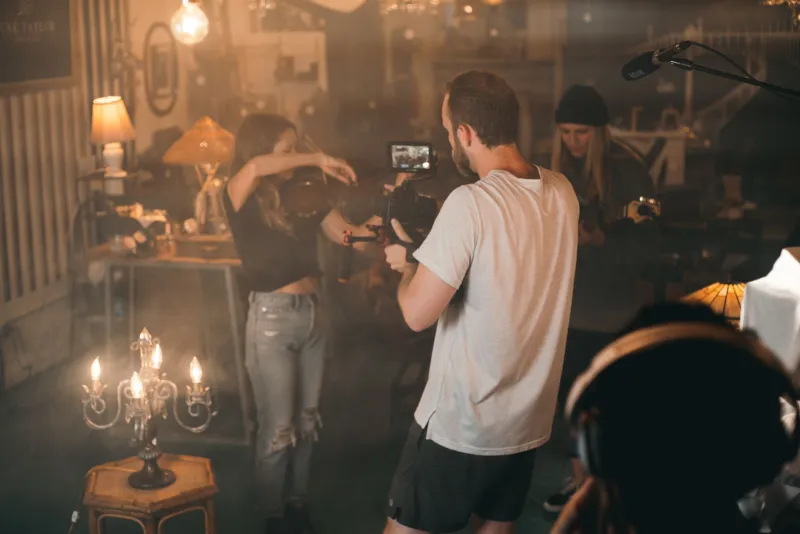
Somewhere in a rented loft in Silver Lake, a brand strategist is arguing with a cinematographer about whether the ring light is too flattering. The goal is a video that looks like it was filmed in a bathroom at 1am during an emotional breakdown. The budget is $47,000. The talent has a vocal coach on retainer specifically to make their voice crack on cue.
Welcome to the Authenticity Industrial Complex — a fully operational, venture-backed, talent-managed machine dedicated to manufacturing the feeling that nothing was manufactured at all.
The Mess Has a Mood Board
Let's start with the aesthetics, because the aesthetics will betray everything. You know the look: slightly desaturated footage, a stray hair across the face, maybe a half-eaten bowl of cereal visible in the background. The creator is wearing a hoodie. There are under-eye circles. The audio has just enough room noise to feel accidental.
None of this is accidental.
That cereal? Placed. The hoodie? Wardrobe. The under-eye circles? Applied with a specific shade of concealer used in reverse — a technique that costs about $300 an hour to get right on camera. The room noise is frequently added in post because modern microphones are too clean and cleanliness reads as corporate.
Production designers in Los Angeles have an entire sub-specialty now: manufacturing the visual language of poverty-chic spontaneity for creators and brands whose actual offices have kombucha on tap and a full-time HR department. It's not cynicism to point this out. It's just the supply chain.
When Did 'Real' Become a Genre?
The pivot happened somewhere around 2016, when brands started noticing that polished ads were getting skipped and shaky iPhone videos were going viral. The lesson the industry took from this was not be more genuine. The lesson was replicate the visual grammar of genuine. These are very different projects.
By 2019, major consumer brands were hiring directors specifically for their ability to make $200,000 campaigns look like a college student filmed them on a dare. Influencer agencies started coaching talent on how to pause mid-sentence, how to laugh at the wrong moment, how to reference something embarrassing from three years ago as if they'd just remembered it. Authenticity became a deliverable with a due date.
Now, in the post-pandemic content economy, the infrastructure is fully mature. There are entire management companies whose pitch decks include phrases like curated vulnerability and strategic relatability. One mid-size creator management firm — which shall remain nameless because their NDA game is airtight — reportedly has a twelve-step framework for what they call an "Origin Story Refresh," which is exactly what it sounds like: a scripted reinvention of a creator's personal narrative, designed to feel like an unguarded moment of self-reflection.
The twelve steps include a recommended crying ratio.
The Platform's Role in All of This
Here's where it gets structurally weird, which is Kharupt's favorite flavor of weird: the platforms themselves are complicit in a way that's almost elegant in its perversity.
TikTok, Instagram, and YouTube all reward content that performs authenticity — low production value, high emotional disclosure, parasocial intimacy — while simultaneously providing analytics dashboards so precise that creators can A/B test which version of their "unscripted" story gets more saves. The algorithm doesn't care if you're real. The algorithm cares if you register as real, which is a completely different optimization problem.
This creates a feedback loop that is genuinely difficult to escape. Creators who try to be actually authentic — messy, inconsistent, sometimes boring, occasionally wrong — get penalized by engagement metrics. Creators who study the emotional beats that authenticity-performing content uses and then reproduce those beats with professional precision get rewarded. The platform economy has essentially run a decade-long natural selection experiment, and what it selected for was really good actors who don't seem like actors.
Can Genuine Mess Even Survive?
This is the question that keeps a certain type of media critic up at night, and honestly, it should keep you up a little too.
There are still creators out there doing something that feels genuinely unmediated — people who post inconsistently, whose production quality actually varies because their life actually varies, who sometimes say things that don't land and don't delete them. They exist. They tend to have smaller audiences, because the algorithm is not optimized for actual human inconsistency. They are also, increasingly, being studied by larger creators the way a pharmaceutical company studies a folk remedy — to identify the active ingredient and synthesize it at scale.
The moment genuine messiness develops a following, it becomes a template. The moment it becomes a template, it becomes a product. The moment it becomes a product, it needs a budget. This is not a conspiracy. It's just capitalism doing its thing with the efficiency of a very well-funded Roomba.
So What Are You Even Watching?
At some point, the philosophical question becomes practical: does it matter? If you watched a creator's tearful confession and it made you feel less alone, does the ring light retroactively negate that? If a brand's shaky, supposedly guerrilla ad campaign made you laugh, is the laugh less real because the shakiness was deliberate?
Maybe not. But there's something worth naming in the gap between what we're told we're receiving — rawness, realness, an unguarded human moment — and what we're actually receiving, which is a carefully engineered simulation of those things, optimized for engagement and signed off by a legal team.
The Authenticity Industrial Complex doesn't just sell you a feeling. It sells you a feeling while telling you it's not selling you anything, which is a much more sophisticated move. It's the difference between a magician who says "watch this trick" and one who insists there's no trick at all while your watch disappears.
Your watch is gone. The cereal was placed. The under-eye circles cost $300 an hour.
And somewhere in Silver Lake, the ring light is still too bright, and someone is getting paid to fix that.