They Packaged Your Loneliness, Slapped a Logo on It, and Called It a Solution
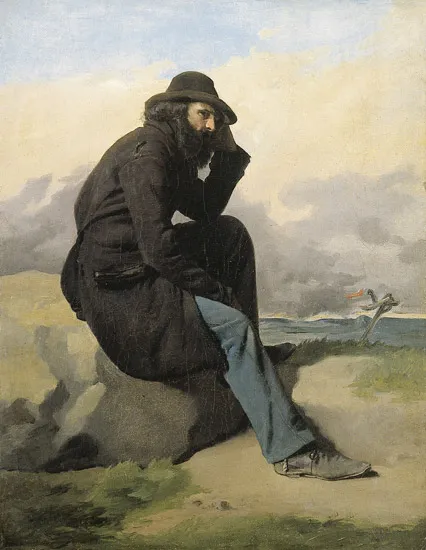
Photo: Antonio Ciseri, Public domain, via Wikimedia Commons
Here's a fun exercise. Open your phone. Count the number of apps you've downloaded specifically because you felt disconnected from other human beings. Now count how many of those apps actually made you feel less disconnected in any meaningful, lasting way. Take your time. We'll wait.
Right.
Welcome to the Loneliness Industrial Complex — a sprawling, $200 billion and growing ecosystem of tech platforms, wellness startups, social subscription services, and professionally curated human experiences all racing to monetize the single most universal feeling on earth. They didn't invent loneliness. But they absolutely did invent the premium version of fixing it.
The Problem That Needed a Price Tag
For most of human history, loneliness was handled the old-fashioned way: you called your cousin, you went to church, you sat on your neighbor's porch until someone brought out sweet tea. It was messy and imperfect and occasionally involved people you didn't even like that much. But it was free. More importantly, it was mutual.
Somewhere along the way — let's be honest, somewhere between the collapse of third places and the rise of the smartphone — that informal social infrastructure started rotting. And into the gap walked an entire industry with a pitch deck and a Series A round.
Now we have apps that match you with "friendship candidates" using compatibility algorithms. We have co-working spaces charging $400 a month to let you sit near other humans while you work alone on separate laptops. We have "social wellness" coaches, loneliness consultants, and, yes, AI companions that learn your communication style and remember your mother's birthday better than your actual friends do. The Surgeon General declared loneliness a public health epidemic in 2023. Venture capitalists heard "epidemic" and immediately started thinking about scale.
The Paradox at the Center of the Pitch
Here's where it gets genuinely weird, in the way that only late-stage capitalism can pull off with a straight face: most of the tools built to combat loneliness are engineered in ways that quietly deepen it.
Take social media, the original sin of this whole operation. Platforms designed to "connect" us turned connection into a performance metric. Likes, followers, engagement rates — suddenly your relationships had a dashboard. You weren't just hanging out with people; you were optimizing reach. And when your reach was low, you felt more alone than if you'd never posted at all.
Or consider the friendship apps — Bumble BFF, Hey! VINA, Meetup — which gamify platonic connection using the same dopamine loops that make dating apps feel like a second job. Swipe, match, ghost, repeat. You're not building a friendship; you're auditing candidates. The intimacy is still somewhere on the roadmap, perpetually in beta.
Even the AI companion apps, which are genuinely sophisticated and genuinely comforting to a lot of people, operate on a subtle lie: the relationship scales to your needs perfectly because it has no needs of its own. And real human connection — the kind that actually cures loneliness — is specifically the thing that doesn't scale to your needs. It pushes back. It cancels plans. It has a bad day and needs you to show up for it. The AI companion removes friction so completely that it accidentally removes the thing that makes connection meaningful.
The Countercultural Act Nobody's Selling
Here's the most disruptive thing you can say in 2025: I'm actually fine being alone.
Not "I'm fine" in the way you say it when someone asks how you're doing and you don't want to get into it. Actually, genuinely, non-performatively fine with your own company. Comfortable in silence that isn't being monetized as a mindfulness retreat. Not shopping for a solution to a problem you haven't decided you have yet.
This is apparently unacceptable. The loneliness industry needs you to feel broken. Not devastatingly broken — just broken enough. Just a little bit deficient in the connection department, just aware enough of the gap between your social life and the one depicted in every piece of content ever made about what a social life should look like. That gap is the product. Your awareness of it is the revenue.
The Surgeon General's report was real and the data in it was alarming. Loneliness does correlate with worse health outcomes. Isolation is genuinely dangerous for a lot of people. None of that is made up. But there's a meaningful difference between addressing a public health crisis and rebranding it as a consumer category — and the wellness industry has never once shown interest in making that distinction.
What They're Not Selling You
The actual research on loneliness — the boring, non-monetizable kind — suggests that what most people need is embarrassingly simple and stubbornly resistant to disruption. Consistent, low-stakes contact with people they already know. Shared physical space. Activities with a purpose beyond the social interaction itself (bowling leagues, community gardens, book clubs, neighborhood bars). Time that isn't optimized for anything.
None of that has a subscription tier. None of it requires a referral code. You can't A/B test a porch conversation or run analytics on a potluck dinner. It doesn't scale. It doesn't pitch well. It is, from a venture capital standpoint, completely useless — which is probably the strongest possible endorsement of its effectiveness.
The things that actually work are the things that are hardest to sell: proximity, repetition, obligation, imperfection. The stuff that happens when you're around people often enough and long enough that the performance stops and something real starts.
The Opt-Out Nobody's Advertising
Look, we're not here to tell you to delete all your apps and become a hermit who communes with nature and grows their own vegetables. This is Kharupt, not a homesteading blog. But we are here to name what's happening, because naming it is at least a start.
The loneliness industrial complex needs you to believe that your disconnection is a personal failure with a market solution. It needs you anxious, self-diagnosing, and swiping. It needs you to frame your desire for human contact as a deficiency to be corrected rather than a basic feature of being alive that humans have been navigating, messily and imperfectly, for the entire history of the species.
The most subversive thing you can do right now isn't to delete Instagram or cancel your AI companion subscription. It's to stop treating your social life like a problem that needs solving and start treating it like a practice that needs showing up for — even when it's inconvenient, even when it's awkward, even when the other person cancels and you have to reschedule and it takes three weeks to actually make it happen.
That's not a product. That's just being a person.
And somehow, in 2025, that's the most radical pitch of all.