You're Not a Customer Anymore. You're a Clue Hunter They Hired for Free.
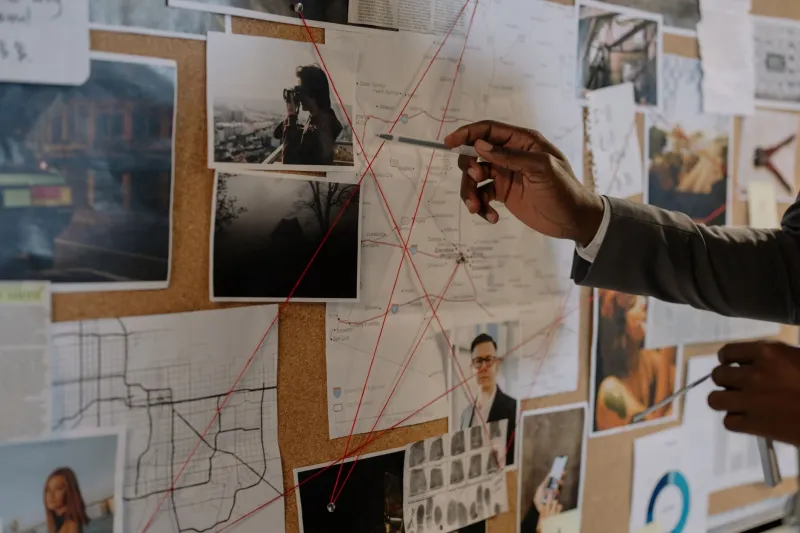
Somewhere right now, a 24-year-old brand strategist named Cody is in a glass-walled conference room in Austin pitching the phrase "immersive narrative ecosystem" to a room full of executives who sell flavored sparkling water. Cody has a deck. Cody has data. Cody has watched every YouTube explainer on alternate reality games ever made, and Cody is about to make you spend forty-five minutes on a Reddit thread decoding a fake shipping label on a can of lime-flavored nothing.
Welcome to the era of corporate fan fiction logic — where the brand isn't just a product anymore, it's a mystery. And you, beautiful distracted consumer, are the detective they never had to pay.
The ARG Playbook, Now Available in Bulk
Alternate reality games — those sprawling, multi-platform puzzle experiences where clues bleed from the internet into physical space and back again — used to be the domain of indie game studios and cult sci-fi franchises with deeply online fandoms. Then someone with a marketing budget noticed that the people playing ARGs weren't just engaged. They were obsessed. They were building wikis, cross-referencing Discord threads at 2am, and evangelizing to anyone who would listen.
That's not a customer. That's a street team that pays you.
So the playbook got photocopied. Wendy's started beefing with fast food competitors in a voice that felt like a chronically online college student. Duolingo's owl became a passive-aggressive entity with implied lore and a parasocial death wish. Netflix began seeding "leaked" production documents and fake in-world news articles for shows before they even dropped a trailer. The line between "we made a thing" and "we manufactured a mythology" quietly dissolved somewhere around 2019, and nobody filed a missing persons report.
When It Slaps: The Case Studies That Actually Worked
Let's be fair — some brands have pulled this off with enough craft that it almost feels like art. Almost.
The Blair Witch Project's original 1999 marketing campaign is the godfather of this whole genre: a fake documentary website, missing persons flyers, IMDb listings that listed the actors as "missing" or "deceased." It was so committed to the bit that people genuinely weren't sure what was real. That's not manipulation — that's a masterclass in fiction bleeding into the world.
More recently, the Barbie movie's 2023 marketing rollout operated like a distributed Easter egg hunt. The production team dropped set photos, cryptic color-coded imagery, and an AI selfie generator that felt less like a promo tool and more like an artifact from the in-movie world. Audiences didn't feel marketed at — they felt like they were already inside something. That's the sweet spot.
Even Spotify's "Wrapped" campaign functions on fan fiction logic: here is a narrative about you, starring you, told in the language of your own consumption data. You didn't just use a product. You lived a story. You share it because it feels like self-expression. Spotify wins because you did the distribution for free.
The formula, when it works, requires two things: genuine creative commitment and enough respect for the audience's intelligence that the mystery actually has an answer worth finding.
When It Gets Ratio'd: The Cringe Wall of Fame
And then there are the brands that tried to run the same play with a deck of Go Fish cards.
Remember when various snack and beverage brands started just... tweeting lowercase unhinged nonsense and calling it "lore"? The "we're not like other brands" energy that peaked around 2021, when every corporation's social media account was suddenly doing a bit about having a villain era? That wasn't mystery. That was a brand manager who watched too much TikTok and convinced themselves that vibes are the same thing as narrative depth.
There's a crucial difference between Easter eggs that reward attention and Easter eggs that are just... eggs. Empty. Decorative. Placed there specifically so a marketing report could later say "consumers spent an average of 4.2 minutes engaging with our interactive content experience." If the rabbit hole leads nowhere, you haven't built a universe. You've built a cul-de-sac with better lighting.
The most embarrassing version of this is the fake leak. Brands have gotten increasingly bold about "accidentally" releasing content — a blurry photo, a supposed internal memo, a "hacked" social account — and audiences, burned enough times now, have developed a finely tuned radar for it. Nothing ends a mystery faster than the crowd collectively typing "this is a PR stunt" in the comments before the brand's own employees have finished their coffee.
The Ethics of Manufacturing Obsession
Here's where it gets genuinely uncomfortable to think about, which is why most people don't.
Fan fiction, fan theories, and ARGs evolved organically from communities of people who loved something so much that they couldn't stop thinking about it. They filled in gaps. They invented lore. They built worlds inside worlds because the original world wasn't enough. That impulse is beautiful and deeply human.
What brands are doing is reverse-engineering that impulse and deploying it as a conversion funnel.
They're not building something worth obsessing over. They're constructing the infrastructure of obsession and then dropping their product inside it like a prize in a cereal box. The engagement is real. The community feeling is real. The hours you spend on the subreddit are real. But the mystery was manufactured specifically to produce those hours, and the only thing waiting at the end is a coupon code.
That's not inherently evil — capitalism has always been in the business of making you want things you didn't know you wanted. But there's something specifically kharupt about the current moment, where the language of genuine artistic mystery has been so thoroughly colonized by marketing departments that it's becoming harder to tell the difference between a creator who actually embedded meaning into their work and a brand that hired an ARG consultant for $80K to simulate the feeling of meaning.
So What Do You Do With This Information
Honestly? Probably nothing. And that's fine.
You can know the trick and still enjoy the trick. You can understand that the Easter egg was placed there deliberately, by a team in a meeting, following a strategy document, and still feel the little dopamine hit when you find it. Knowing how a roller coaster works doesn't make the drop less real.
But maybe — maybe — the next time you're three hours deep into a Reddit thread decoding a brand's supposedly cryptic packaging redesign, you take a second to ask: is this mystery actually going somewhere? Or am I doing unpaid labor for a corporation that has correctly identified my pattern-recognition instincts as a free distribution channel?
Cody in Austin is counting on you not asking that question.
Don't give Cody the satisfaction. Or do. Either way, the algorithm already knows which one you picked.